
Monopolar Electrosurgery vs. Bipolar Electrosurgery
July 20, 2026
Electrosurgery uses high-frequency electrical current to cut, coagulate, desiccate, or fulgurate tissue during surgical procedures. Depending on the clinical application, surgeons can choose between monopolar and bipolar electrosurgery, each offering distinct advantages in precision, safety, and tissue interaction.
The primary difference between the two techniques lies in how the electrical current travels through the body. In monopolar electrosurgery, the current flows from the active electrode through the patient’s tissue to a return electrode pad, completing the electrical circuit. In bipolar electrosurgery, however, the current passes only between the two tips of the forceps-like electrode, limiting the energy flow to the targeted tissue area.
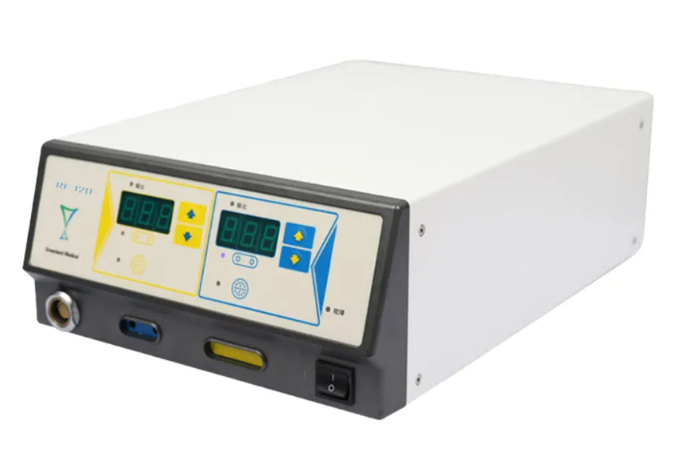
Understanding Electrosurgery, Bipolar, and Monopolar ESUs
Electrosurgical units (ESUs) are commonly used in modern operating rooms, yet the terminology surrounding them can often create confusion. Medical staff may refer to an ESU by a manufacturer name, such as “Bovie,” while others may casually describe all electrosurgical devices as “bipolar units.” For biomedical equipment technicians and clinical personnel, this lack of consistency can sometimes lead to misunderstandings and unnecessary troubleshooting delays. For this reason, it is always important to verify exactly which device requires service or repair before beginning maintenance procedures.
Electrosurgery uses high-frequency electrical current to cut, coagulate, desiccate, or fulgurate tissue during surgical procedures. Desiccation refers to the drying of tissue, while fulguration involves destroying or removing tissue, commonly used for procedures such as wart or tumor removal. By carefully controlling electrical energy, electrosurgery allows surgeons to achieve precise tissue effects while minimizing bleeding.
Electrocautery vs. Electrosurgery: What's the Difference?
In medical practice, the terms “electrocautery” and “electrosurgery” are often used interchangeably. While both techniques involve the use of electrical energy during surgical procedures, there is an important technical distinction between them.
Electrosurgery is a broad term that refers to surgical procedures using high-frequency electrical current to cut, coagulate, desiccate, or fulgurate tissue. In most electrosurgical systems, alternating current (AC) is used because it can generate the precise frequencies required to cut tissue efficiently while minimizing excessive thermal damage. By operating at high frequencies, electrosurgery can separate tissue and control bleeding simultaneously with improved precision.
Electrocautery, on the other hand, specifically refers to the use of electrically generated heat to burn or cauterize tissue. In an electrocautery device, a direct current (DC) is typically used to heat a metal tip located at the end of the handpiece. The heated metal is then applied directly to the tissue to achieve cauterization. Unlike electrosurgery, electrocautery does not pass electrical current through the patient’s body and does not require a completed electrical circuit.
Because of this difference, electrocautery is generally considered a thermal technique, while electrosurgery is an electrical tissue-interaction technique.
What Is the Difference Between Monopolar and Bipolar Electrosurgery?
Electrosurgical systems use high-frequency alternating current to cut tissue and control bleeding during surgical procedures. For the electrical current to function effectively, a complete circuit must be formed. The main difference between monopolar and bipolar electrosurgery lies in how this electrical circuit is completed.
Monopolar Electrosurgery
Monopolar electrosurgery is the most widely used electrosurgical technique because of its versatility, efficiency, and ability to handle a broad range of surgical procedures. In this method, the electrical current flows from the active electrode in the surgical handpiece, through the patient’s body, and finally to a dispersive return pad attached to the patient. The return pad safely transfers the current back to the electrosurgical generator, completing the electrical circuit.
During monopolar procedures, surgeons commonly use an electrosurgical pencil to deliver energy directly to the treatment site. This configuration enables monopolar electrosurgery to perform multiple functions, including tissue cutting, coagulation, desiccation, and fulguration. Because the current travels through a larger area of the body, monopolar systems are highly effective for procedures requiring rapid tissue dissection and treatment of larger surgical areas.
Its flexibility, strong cutting performance, and efficient bleeding control make monopolar electrosurgery the preferred choice in many operating rooms and general surgical applications.
Bipolar Electrosurgery
Bipolar electrosurgery differs from monopolar electrosurgery in the way the electrical circuit is completed. Instead of requiring a dispersive return pad, both the active and return electrodes are integrated directly into the surgical instrument, most commonly in the form of forceps. The electrical current travels down one side of the forceps, passes through the tissue held between the tips, and returns through the opposite side back to the generator.
Because the current remains confined to the tissue located between the two electrode tips, bipolar electrosurgery operates with greater precision and typically requires lower voltage and less energy. This localized current flow significantly reduces the risk of unintended thermal damage to surrounding tissues and minimizes the possibility of patient burns.
Bipolar electrosurgery is particularly suitable for delicate procedures such as microsurgery and neurosurgery, where precise tissue control is essential. It also provides improved coagulation control and is generally considered safer for patients with implanted electronic medical devices, such as pacemakers, because the electrical current does not travel extensively through the body. However, surgeons should always review the manufacturer guidelines for implanted devices before performing electrosurgical procedures.
Cut vs. Coagulation Modes
Different ESU modes produce different tissue effects based on the waveform delivered by the generator. In cut mode, the ESU generates a continuous, nonmodulated sinusoidal waveform that delivers high power density with relatively low voltage. This allows tissue to be cut smoothly and efficiently with minimal thermal damage to surrounding structures.
Coagulation mode, by contrast, uses interrupted or modulated waveforms that create greater heat dispersion. This produces slower tissue heating and promotes blood clotting and hemostasis rather than rapid tissue division. By adjusting waveform characteristics, surgeons can select the most appropriate tissue effect for each surgical application.
Key Differences Between Monopolar and Bipolar Electrosurgery
The primary distinction between the two methods is the path of the electrical current. In monopolar electrosurgery, the current passes through the patient’s body to a return pad, while in bipolar electrosurgery, the current remains localized between the two electrodes of the instrument.
Monopolar electrosurgery is generally preferred for its flexibility and ability to handle larger surgical areas efficiently. Bipolar electrosurgery, however, is often chosen for delicate procedures requiring precise energy delivery and for patients with implanted electronic medical devices, such as pacemakers, where limiting current flow through the body is important for safety.
RELATED PRODUCTS