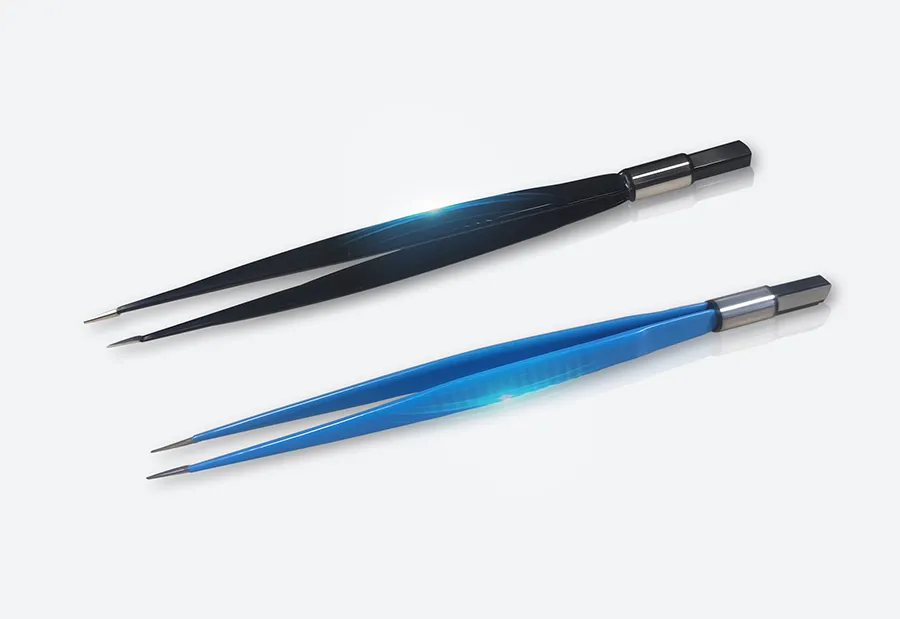
RF-120 Clinical Applications for Precision Electrosurgery
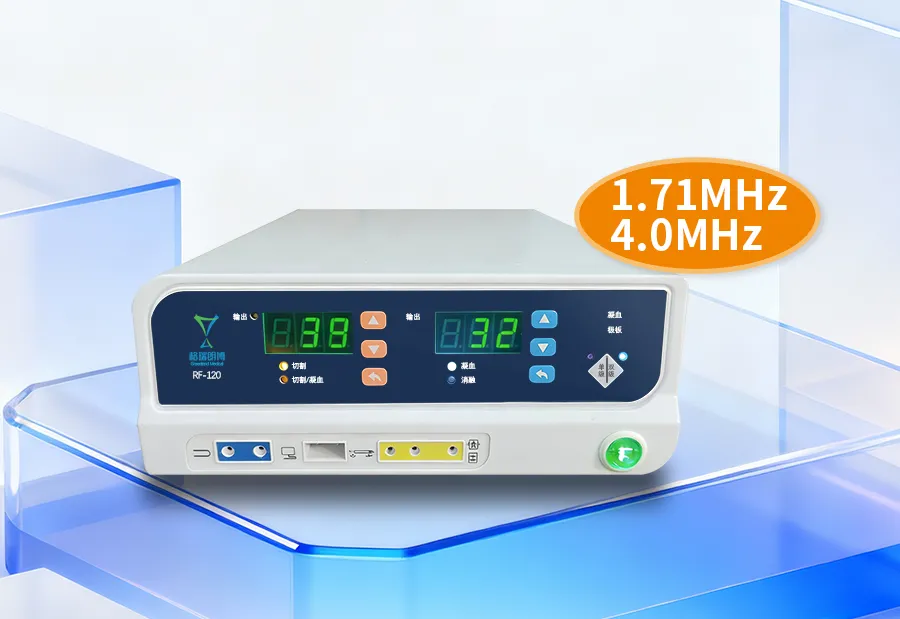
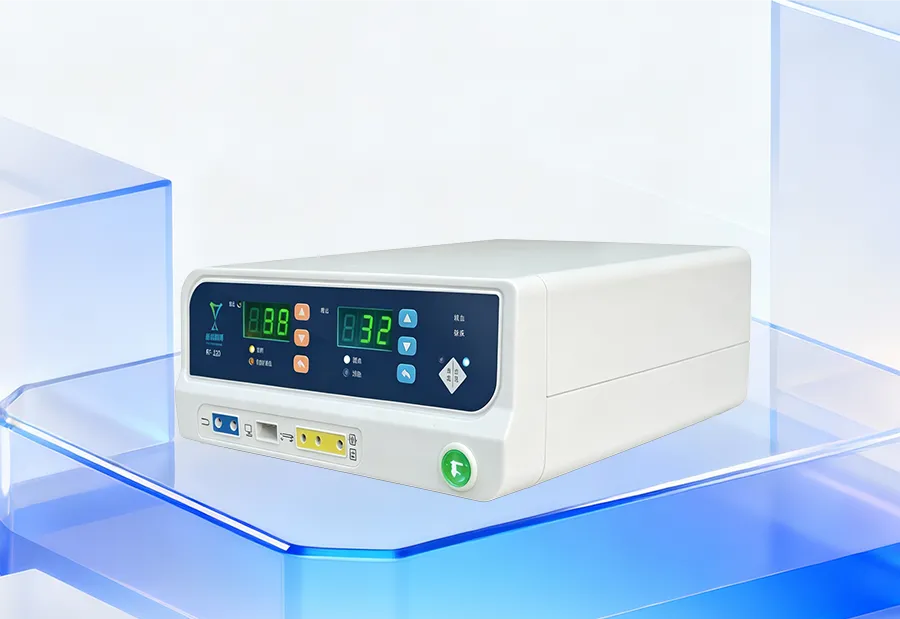
The RF-120 is a dual-frequency RF electrosurgical unit designed for surgical procedures that require controlled tissue cutting, coagulation, hemostasis, and ablation. With 4.0MHz monopolar output and 1.71MHz bipolar output, the system supports different surgical techniques within one platform.
Its high-frequency RF energy is designed for precise tissue handling with controlled thermal effects, making the RF-120 suitable for both conventional soft tissue surgery and procedures that require fine, localized electrosurgical operation.
Gynecological Surgery
The RF-120 can support gynecological procedures requiring precise tissue cutting and controlled coagulation. Its bipolar working mode is suitable for localized tissue handling where controlled energy delivery is important.
Typical applications include hysteroscopic minimally invasive procedures, cervical lesion resection, endometrial treatment, and selected gynecological soft tissue procedures.
The combination of fine cutting and controlled coagulation helps surgical teams maintain a clear operative field while limiting unnecessary thermal effects around the treatment area.
Dermatology and Plastic Surgery
In dermatology and plastic surgery, electrosurgical equipment may be used for precise soft tissue cutting, lesion removal, tissue trimming, and hemostasis.
The RF-120 provides fine RF cutting and coagulation capabilities for procedures where controlled tissue interaction is required. Its low-temperature RF operating characteristics are designed to reduce excessive tissue carbonization and help preserve surrounding tissue during delicate procedures.
The system can be applied to skin lesion excision, nevus removal, soft tissue trimming, and other selected dermatological or aesthetic surgical procedures.
Ophthalmic Surgery
Ophthalmic procedures require careful control of surgical energy because the operating area may involve delicate tissues and limited working space.
The RF-120 supports localized bipolar energy delivery for procedures requiring controlled cutting and coagulation. Its bipolar configuration concentrates current between the active instrument tips, providing a localized operating area without relying on a conventional monopolar return path.
For ophthalmic applications, the appropriate electrode, power level, and operating technique should be selected according to the specific procedure and clinical protocol.
ENT and Dental Surgery
The RF-120 can be used in selected otorhinolaryngology and dental soft tissue procedures where precise cutting and coagulation are required.
In ENT applications, RF electrosurgery can support procedures involving localized soft tissue treatment, including selected nasal and oral soft tissue procedures. In dental surgery, RF energy can be used for controlled soft tissue cutting and coagulation with compatible surgical electrodes.
The combination of RF cutting and hemostatic capability can help maintain visibility of the surgical field and support efficient tissue management during fine procedures.
Anorectal Surgery
Anorectal procedures often require precise treatment of soft tissue within a confined surgical area. The RF-120 combines cutting and coagulation functions to support controlled tissue treatment and surgical hemostasis.
Its low-temperature RF characteristics are designed to reduce excessive thermal effects and tissue carbonization during appropriate procedures. This makes the system suitable for selected anorectal procedures requiring fine cutting, coagulation, and localized tissue ablation.
General Surgery and Orthopedic Procedures
The monopolar mode of the RF-120 is designed for conventional soft tissue cutting and coagulation, making it suitable for selected general surgery and orthopedic procedures where high-frequency electrosurgical energy is required.
The 4.0MHz monopolar output provides a dedicated RF operating mode for tissue cutting and coagulation, while the bipolar mode can be selected when a more localized energy path is required.
This dual-mode configuration allows hospitals and surgical centers to use one RF electrosurgical platform across different procedure types and surgical requirements.
Low-Temperature RF Technology for Tissue Management
A key feature of RF electrosurgery is the ability to deliver high-frequency energy for controlled tissue effects. The RF-120 uses 4.0MHz monopolar and 1.71MHz bipolar output to support precise surgical energy delivery.
For procedures where tissue preservation and specimen quality are important, controlled thermal effects can help reduce excessive carbonization around the surgical site. The RF-120 is designed to support fine tissue cutting while limiting unnecessary thermal impact on adjacent tissue.
This characteristic is particularly relevant to delicate procedures in dermatology, plastic surgery, ophthalmology, gynecology, ENT, dental surgery, and anorectal surgery.
RF-120 Surgical Functions at a Glance
| Surgical requirement |
RF-120 configuration |
Typical application |
| Precise tissue cutting |
Monopolar / Bipolar |
Fine soft tissue procedures |
| Tissue coagulation |
Monopolar / Bipolar |
Hemostasis |
| Localized coagulation |
Bipolar |
Delicate surgical procedures |
| Tissue ablation |
Bipolar |
Selected tissue ablation procedures |
| Conventional soft tissue surgery |
4.0MHz monopolar |
General surgery and orthopedic procedures |
| Fine minimally invasive surgery |
1.71MHz bipolar |
Specialty and localized procedures |
| Low-temperature tissue management |
RF output |
Procedures requiring controlled thermal effects |