
Low-Temperature Plasma Surgery Market 2026: The Shift from Electrosurgery to Plasma-Mediated Ablation
August 25, 2026
The Numbers: 2026 Plasma Surgery Market Snapshot
|
Data Point |
Value |
Source |
|
Low-temperature plasma surgery market, 2025 |
~USD 1.5B, ~7.5% CAGR through 2033 |
Data Insights Market |
|
Low-temperature plasma surgery market |
USD 1.2B (2025) → USD 3.8B (2033), 15.2% CAGR |
Micro Market Insights |
|
Plasma radiofrequency ablation machine market |
USD 855.7M (2025) → USD 1,424.3M (2032), 7.55% CAGR |
PW Consulting |
|
Plasma surgery market, 2025 |
North America USD 1,095.9M (38.1%), Europe USD 789.5M (27.5%), Asia-Pacific USD 702.4M (24.4%) |
PW Consulting |
|
Plasma probes revenue share, 2025 |
65.5% of plasma surgery market |
PW Consulting |
|
Operating temperature |
40–70°C in conductive media, ~450 kHz |
Industry / clinical literature |
What Is Driving the Market in 2026
1. The transition from electrosurgery to plasma-mediated ablation. Plasma devices operate in conductive media at 40–70°C, causing far less thermal damage to healthy tissue than traditional electrosurgery. In 2025–2026, surgeons began systematically replacing conventional tools in sensitive areas — tonsils, turbinates, discs, joints, and nerves — because plasma reduces collateral spread, post-operative pain, and recovery time. This is the core structural driver of the segment.
2. Smart electrodes and robotic integration. Intelligent tissue-sensing electrodes now adjust power automatically based on real-time impedance, improving safety and consistency. Plasma ablation is also being integrated with robotic surgical platforms, particularly for spine and neurosurgery, where precision matters most.
3. Expanding specialty applications. ENT remains the largest application, but orthopedics (sports medicine, arthroscopy), urology, gynecology, and pain management are scaling fast. Niche applications such as pediatric tonsillectomy are emerging as dedicated segments with specialized single-use tips.
4. Asia-Pacific is the growth pole. China and India are expanding hospital networks, private investment, and OR modernization at pace, making Asia-Pacific the fastest-growing region through 2032 — while North America still leads on installed base and adoption depth.
Technology and Regulatory Trends Buyers Are Seeing
- Consumables drive the business model. Plasma probes and single-use wands account for roughly 65% of plasma surgery market revenue — the capital generator is the entry point, the consumable line is the recurring stream. Disposable plasma surgical electrodes and RF-plasma dual-purpose electrodes are where margin concentration is shifting.
- 2-in-1 platforms reduce capital cost. Systems that combine plasma and radiofrequency in one generator — like the PRF-300 plasma & radiofrequency 2-in-1 system — let hospitals serve ENT, spine, sports medicine, and pain departments from a single capital purchase.
- Regulatory depth is the moat. ISO 13485 quality management, FDA 510(k), and CE marking govern market access; the FDA's Quality System Regulation amendments took effect in February 2026, raising documentation and validation requirements. Germany's dedicated reimbursement codes for certain cold plasma treatments are also converting clinical interest into steady purchasing.
What This Means for Hospital Buyers and Distributors
- Evaluate total cost, not just the generator. With consumables at ~65% of market revenue, model the disposable wand/electrode stream when comparing systems.
- Prefer multi-modality platforms. Plasma-plus-RF 2-in-1 systems amortize capital across more specialties and future-proof the OR.
- Demand regulatory files. ISO 13485, FDA 510(k), and CE documentation — plus QSR-amendment compliance for U.S. distribution — should be verified before evaluation.
- Position for Asia-Pacific growth. With China and India modernizing ORs fastest, distributors with local regulatory navigation and service capability capture the fastest-growing demand pool.
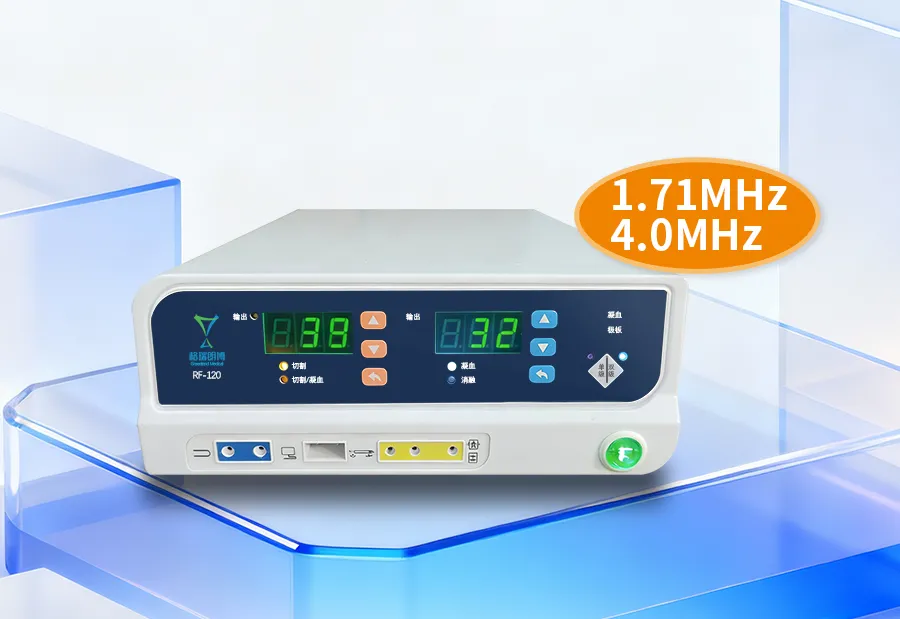
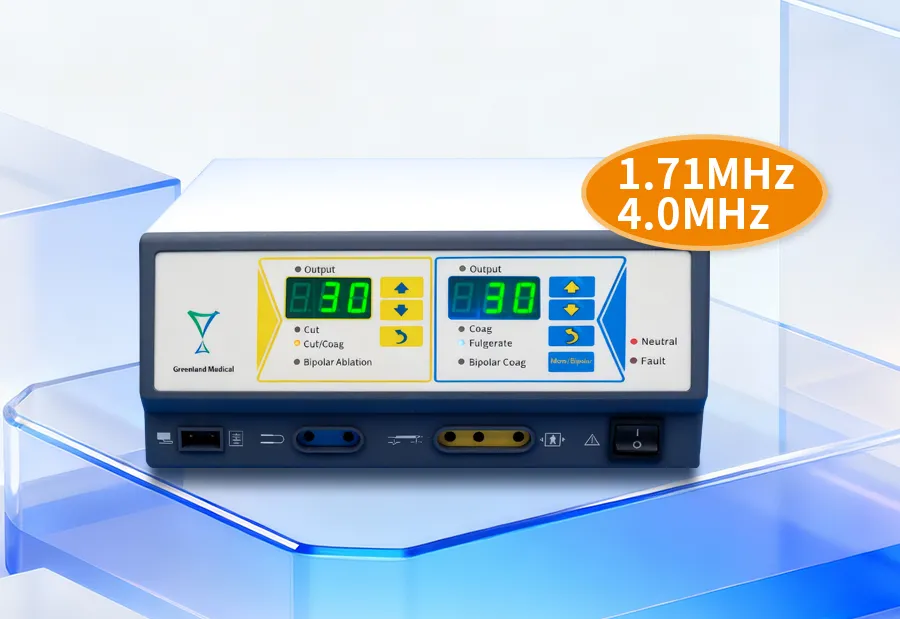
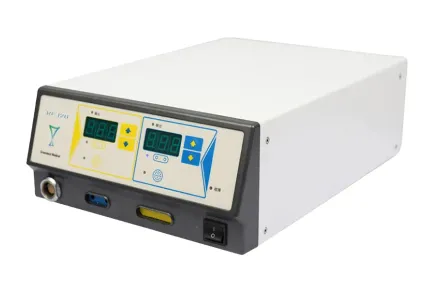
Greenland's plasma surgery systems — including the P-300 plasma surgery system and the PRF-300 plasma & radiofrequency 2-in-1 — have reached world-class levels, supporting clinicians across otorhinolaryngology, sports medicine, and spinal surgery.
About Greenland
Beiling Greenland Co., Ltd. (Greenland), established in 2003, is a professional electrosurgical unit manufacturer with more than 20 years of R&D and production experience in radiofrequency surgical equipment. Its RF electrosurgical units and RF bipolar ablation electrodes were the first sets registered in China. Greenland holds numerous invention and utility model patents, is certified to GB/T 4206-2022 idt ISO 13485, and operates a 100,000-class cleanroom with a mature quality control system and 20+ senior R&D personnel. Products are exported to more than 30 countries and regions.
For plasma surgery system and OEM/ODM inquiries, contact business@greenlandmed.com.
Keywords: plasma surgery market 2026, low temperature plasma surgery, coblation, plasma ablation, plasma surgery system, plasma radiofreque
RELATED PRODUCTS